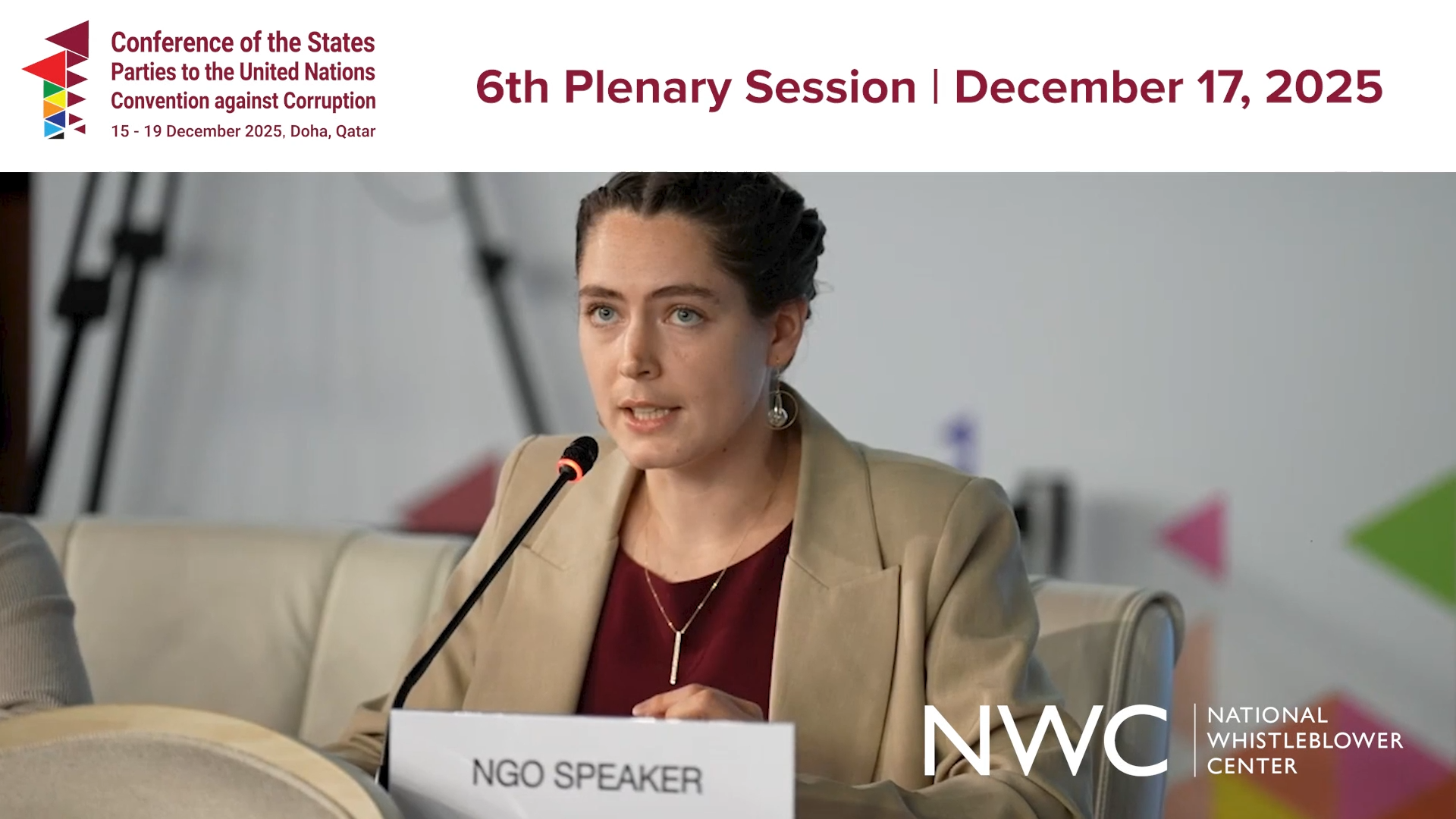
This week, the international whistleblower protection crisis took center stage at the 11th Conference of the States Parties (CoSP 11) to the UN Convention against Corruption (UNCAC). The National Whistleblower Center’s (NWC) International Liaison, Kate Reeves, delivered a speech at the 6th plenary session calling on state parties to amend longstanding weaknesses in whistleblower protections.
NWC outlined two major issues with the current system: 1. Whistleblowers are not protected from the start and must endure reprisal before relief; 2. There is no enforcement mechanism requiring states to investigate whistleblower tips. Currently, whistleblower remedies are executed only as a “retroactive, rather than a preemptive strategy,” forcing those brave enough to report corruption to suffer harsh retaliation before receiving any relief. Even if that relief is granted, whistleblowers often face years-long cases with minimal resolution to the concerns they raised. UNCAC does not formally recognize any enforcement mechanism that requires state parties to act on whistleblower tips.
“The company is not investigated or put under trial for the wrongdoing the whistleblower reported. In this perverse system, it is the whistleblower who is put on trial,” Reeves stated.
The UN’s treatment of whistleblowing as labor disputes results in the neglect of one of the most effective anti-corruption strategies: informed insiders. To leverage insider knowledge and protect whistleblowers, Reeves...
Read Full Story:
https://news.google.com/rss/articles/CBMivgFBVV95cUxOVDFCMW9LZWV3YzJQMC1FZGx0...